
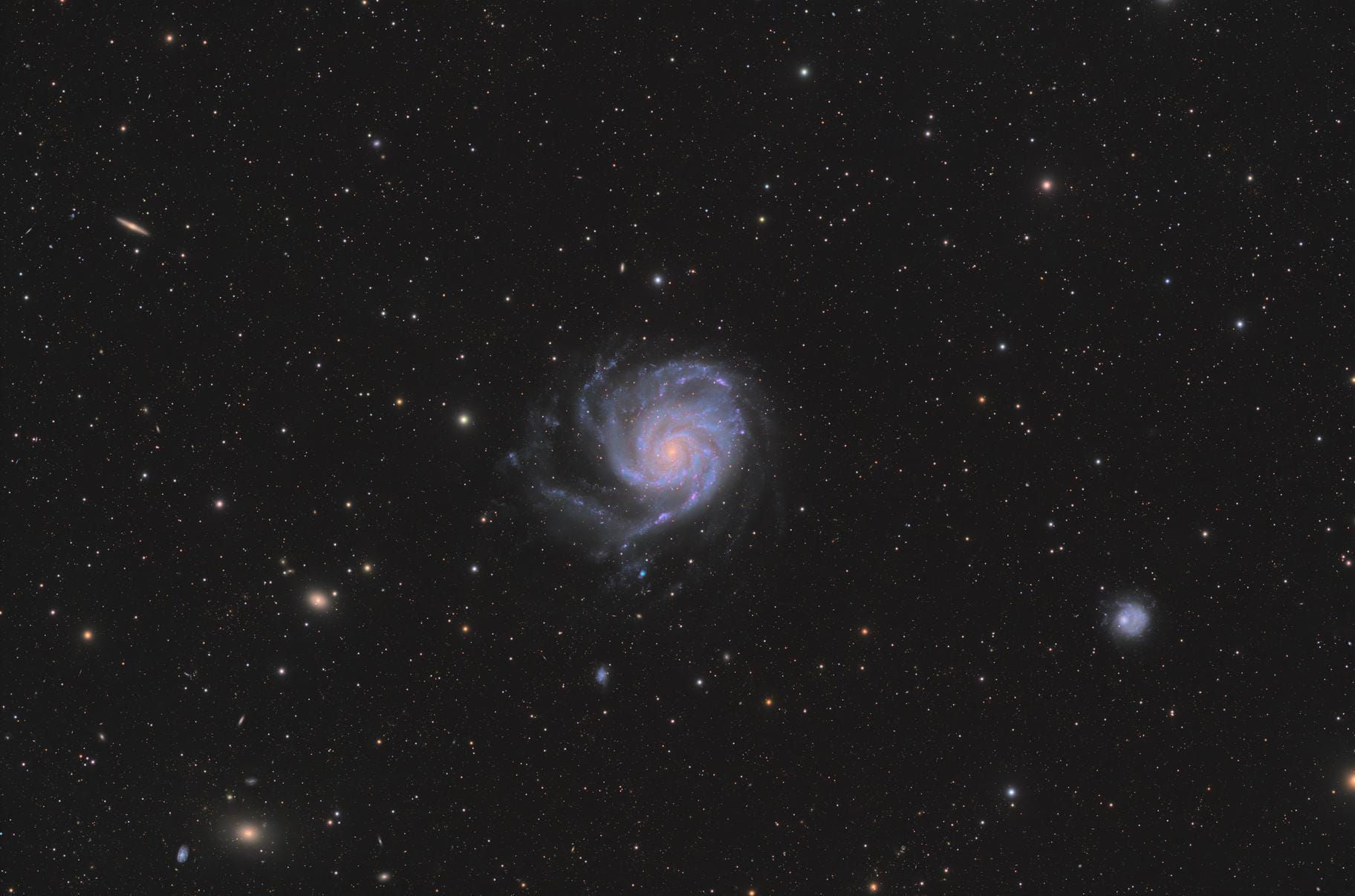
If you’ve ever struggled to bring out the faint spiral arms of M101, you’re not alone. Even the best equipment can feel powerless under light-polluted skies. To prove just how much dark skies matter, I shot M101 from my backyard in Bortle 9 conditions and then captured the same galaxy from DSP Remote’s pristine Bortle 1 skies. With identical exposure times and nearly identical gear setups, the difference is nothing short of jaw-dropping.
The Bortle Scale and Why It Matters
The Bortle Dark-Sky Scale is a nine-level measure of night sky brightness, with Bortle 1 representing the darkest skies on Earth and Bortle 9 representing inner-city light pollution. In Bortle 9 skies, the faint outer structures of galaxies and nebulae are almost completely lost behind the orange glow of artificial lights. At Bortle 1, however, the same faint details emerge naturally—even in single exposures—because there’s virtually no light pollution masking them.
Single Frame Comparison: Bortle 9 vs. Bortle 1
Take a look at these single sub-exposures of M101. In Bortle 9, the frame is overwhelmed by light pollution, and only the bright core is faintly visible. In contrast, the Bortle 1 frame already shows spiral structure, dust lanes, and hints of surrounding faint galaxies—before any stacking or post-processing.
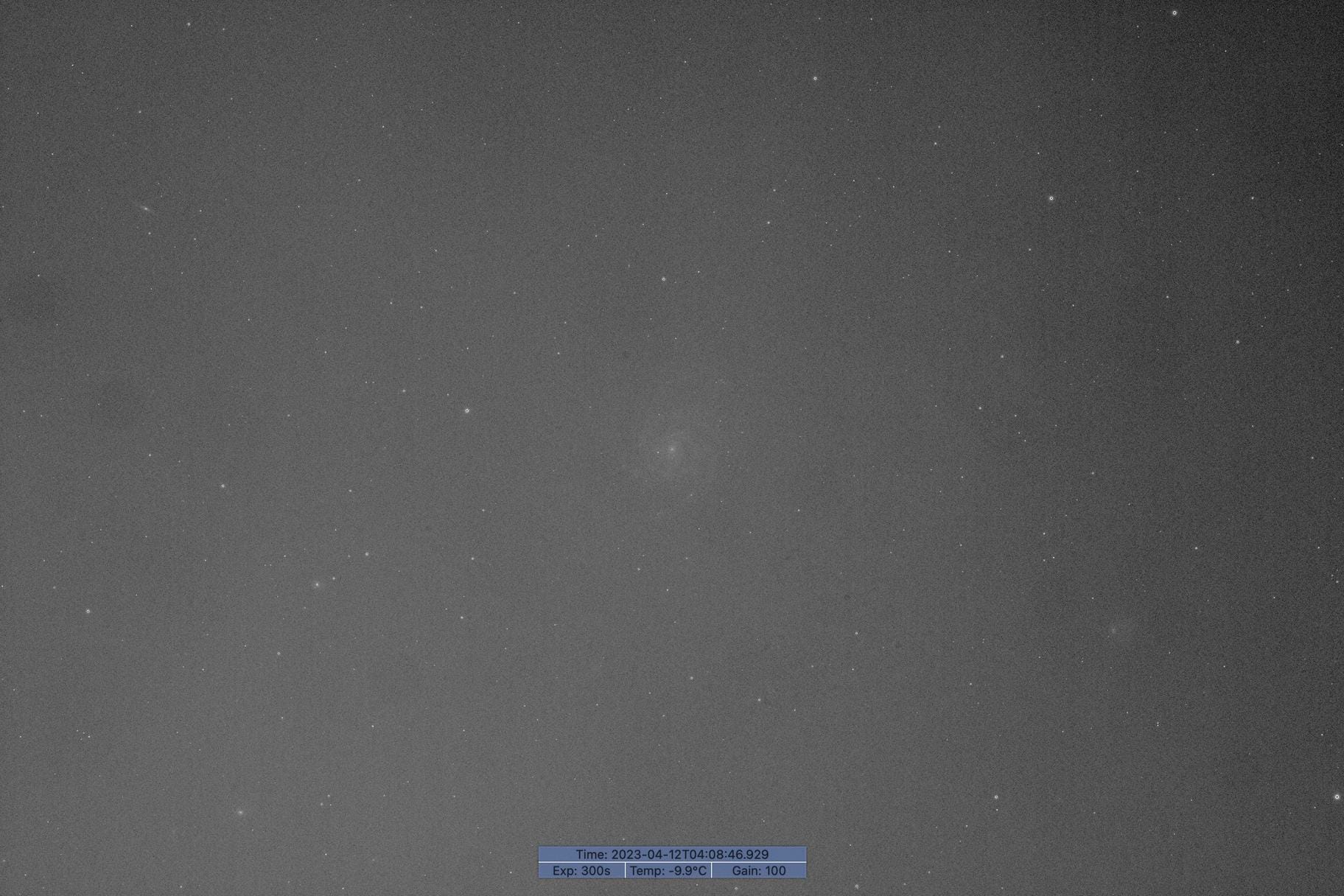
Above is the bortle 9 image of M101, a single frame shot on the Takahashi TOA-130NFB. 300s exposure (to limit overexposure).
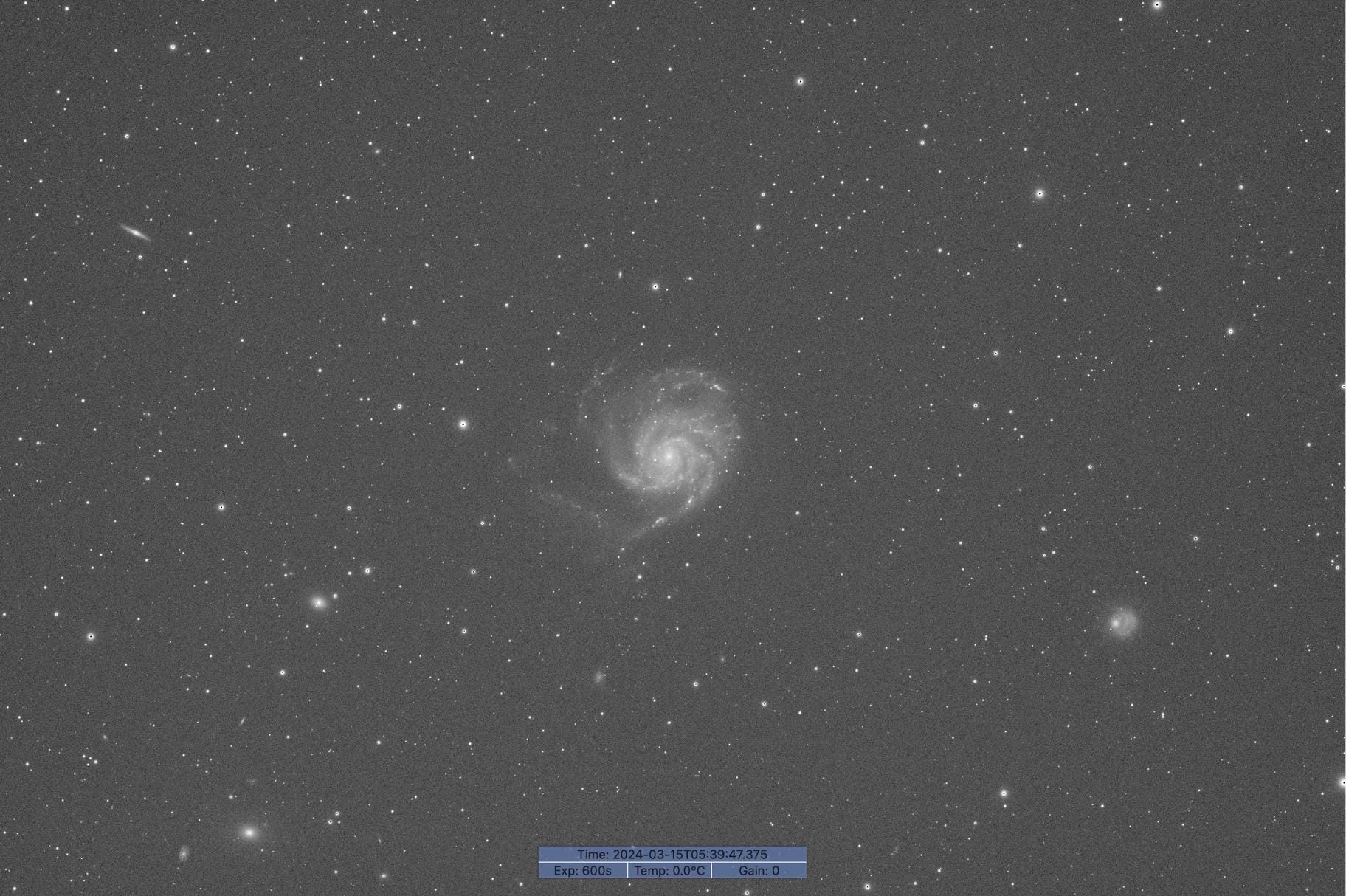
Above is the bortle 1 image of M101, also a single frame shot on the Takahashi TOA-130NFB. 600s exposure.
Processing the Data: The Hidden Advantage of Bortle 1
While careful processing and noise reduction can help salvage Bortle 9 data, it’s like trying to polish a scratched lens. The signal-to-noise ratio (SNR) is fundamentally lower, meaning you spend more time fighting gradients, color shifts, and noise than actually enhancing the object’s details.
By comparison, Bortle 1 data is clean, balanced, and rich with natural signal, which means you can stretch your data further without introducing artifacts. My Bortle 1 final stack of M101 required fewer processing steps, no heavy-handed noise reduction, and revealed far more intricate spiral arm detail.
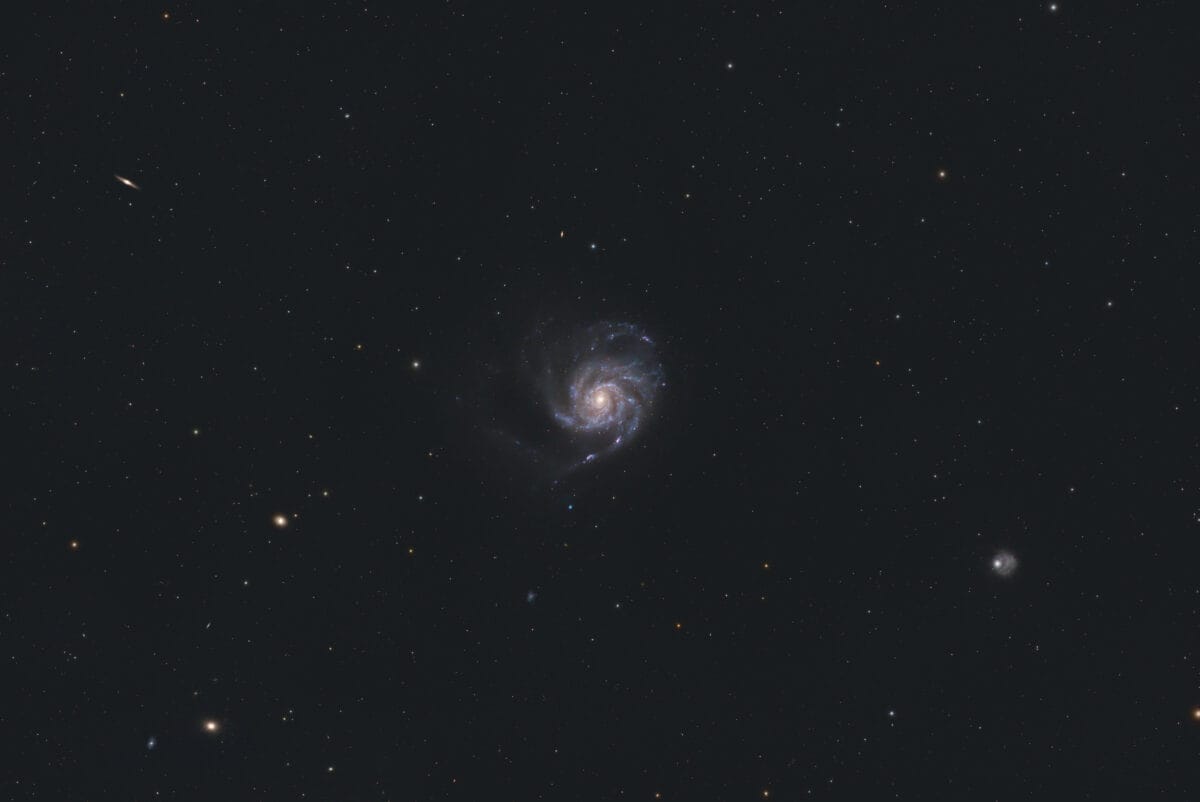
The final processed image from my back yard, bortle 9 sky south of Houston. 8 hours final exposure time.
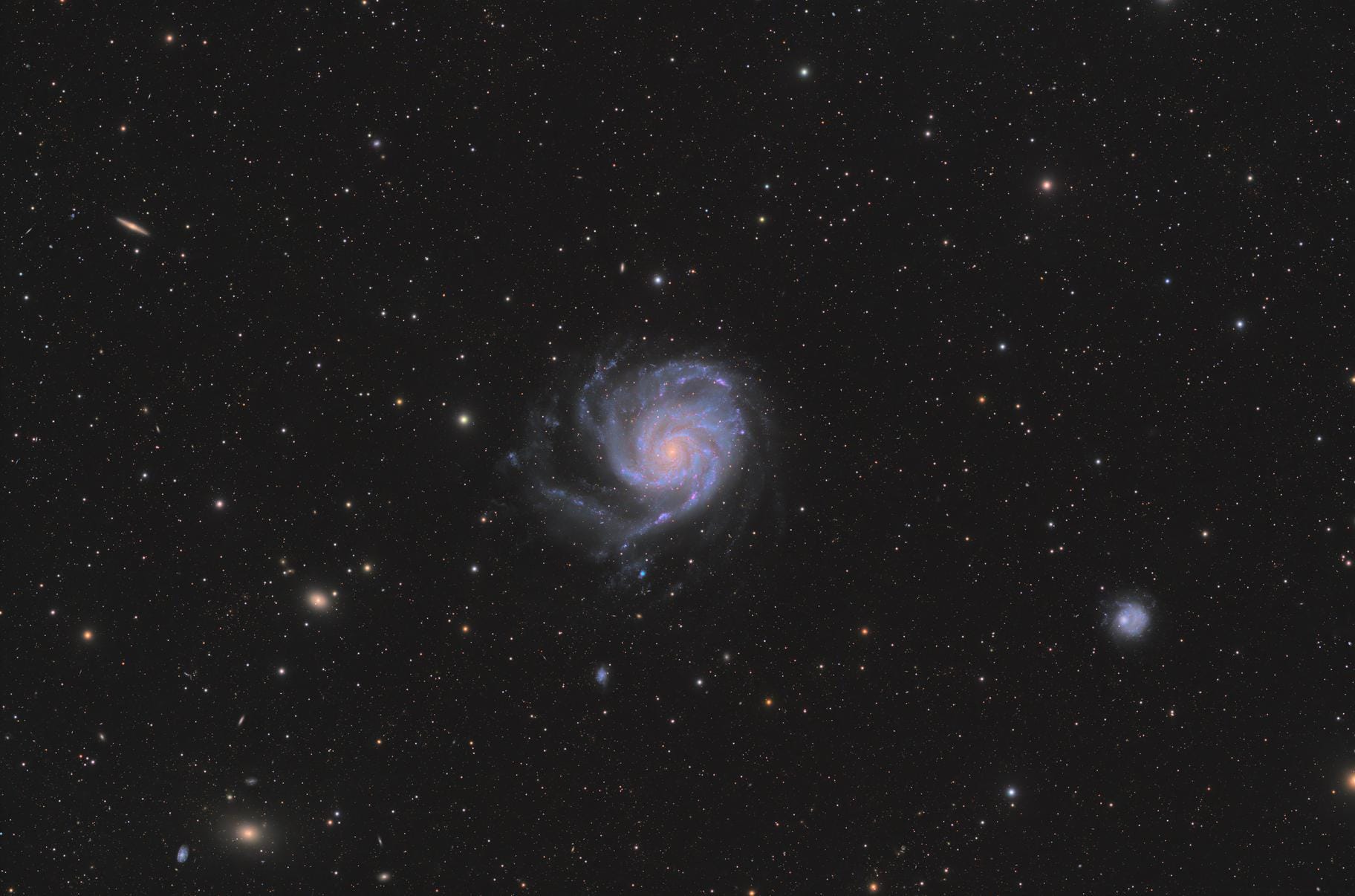
And the final processed image from DSP Remote’s bortle 1 skies. 8 hours final exposure time.
Why DSP Remote’s Bortle 1 Skies Are a Game-Changer
The difference isn’t just noticeable—it’s transformative. Under DSP Remote’s Bortle 1 skies in Animas, New Mexico, you can capture more usable data in a single hour than you might gather in multiple nights under city skies. Fainter objects like the Horsehead Nebula, M101’s outer tidal streams, or even integrated flux nebula (IFN) simply become accessible.
DSPR offers professional-grade hosting with Bortle 1 conditions, so your equipment can work 24/7 under some of the darkest skies in North America. You don’t just get better data—you get more of it, faster.
How You Can Experience This Difference
If you’ve never imaged under Bortle 1 skies, the difference can feel like stepping from standard definition into 4K HDR. Whether you host your own rig with DSP Remote or simply compare the results from our member gallery of AstroBin-nominated images, you’ll see just how much dark skies can elevate your astrophotography.
Explore our hosting plans and see how Bortle 1 skies can transform your imaging results.