
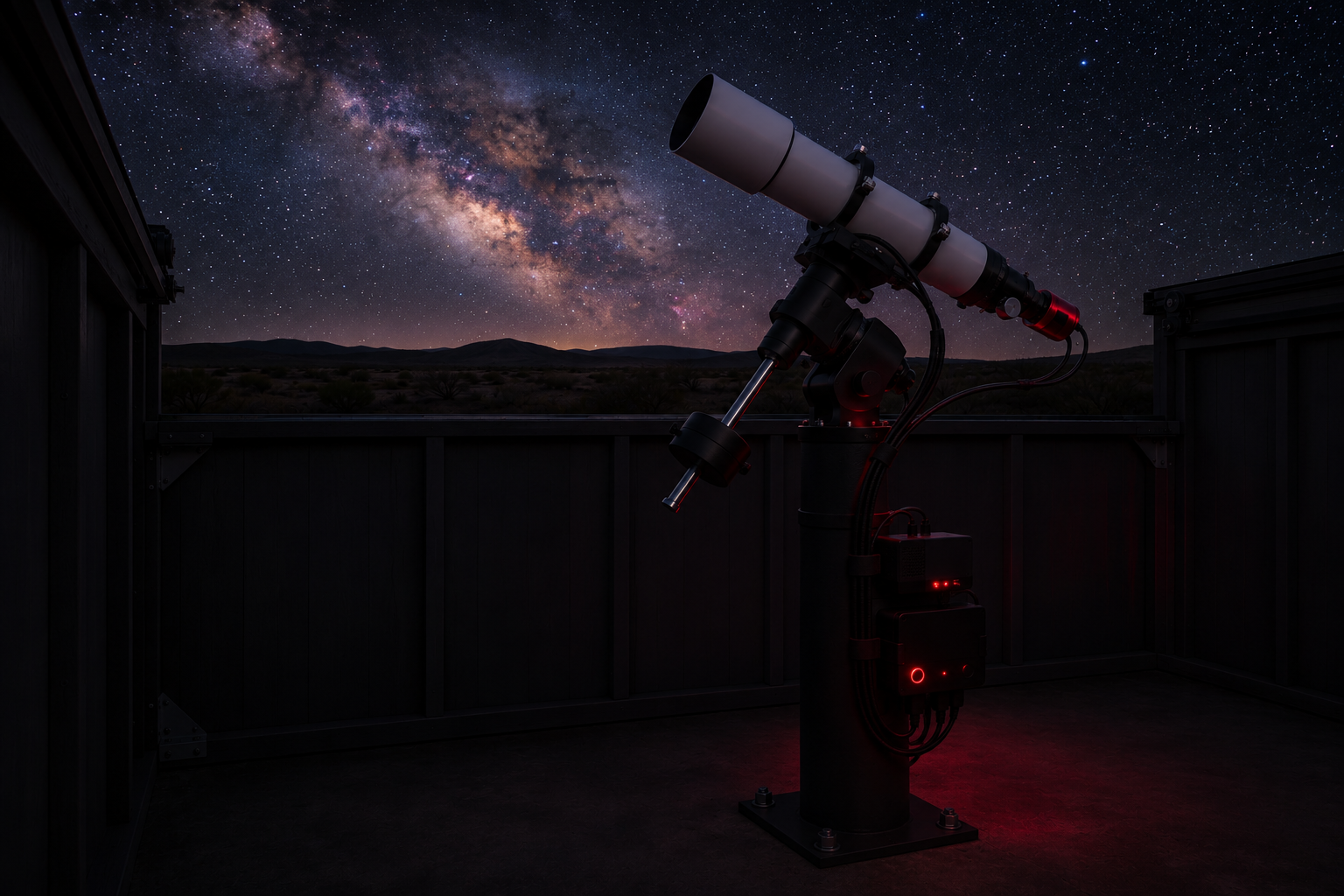
Remote telescope hosting means you keep owning your telescope, mount and camera, but they live on a pier at a dark-sky observatory instead of in your backyard. You run the rig from home over the internet, and the host provides the pier, the building, power, internet and hands on site when something needs a human. At DSP Remote that site is near Animas, New Mexico, under true Bortle 1 skies, and piers start at $300 a month.
Below is how it works in practice: what you own, what the host does, how you control the rig from home, what it costs, and what changes about the hobby when your gear is hundreds of miles away.
Quick facts
- DSP Remote is near Animas, New Mexico, at 4,240 ft elevation, under true Bortle 1 skies.
- The site averages over 286 clear nights a year.
- Piers are priced by swing diameter: Small Kit $300 a month, Medium $450, Large $500, Extra-Large $550, and Custom from $550.
- Terms are 6 or 12 months with the rate locked for the term, and no hidden fees.
- Every member gets a custom pier in a fully enclosed bay, with automated roll-off roofs and dedicated multi-dish Starlink internet.
- Support is owner-run with no ticket queue. Most requests are answered in as little as 15 minutes, and up to 24 hours.
What is remote telescope hosting?
Remote telescope hosting is a service where an observatory rents you a pier for your own imaging rig and keeps it running at a dark site. You pay a monthly fee, ship or deliver your equipment, and then image from anywhere with an internet connection. The telescope stays yours the whole time.
It's different from renting telescope time. With rental services you book hours on a telescope someone else owns and configured, and you get back the data. With hosting, you choose the optics, the camera, the filters and the software, and the rig is available to you every clear night of your term. You decide what to shoot and for how long.
People also call it a remote observatory, a hosted pier or remote observatory rental. They usually mean the same arrangement: your gear, someone else's dark sky.
Who owns the equipment in a hosted observatory?
You do. Your telescope, mount, camera, filter wheel, focuser, computer and power hub remain your property, and you can swap or upgrade them during your term (at DSP Remote, scope and mount swaps may carry additional charges). The host owns the land, the building, the roof, the pier infrastructure and the site network.
Because the gear is yours, so is the insurance question. At DSP Remote, members can carry a personal articles policy through their own insurance agent. That typically runs about $1 per $1,000 of equipment per month, so a $15,000 rig costs roughly $15 a month to cover.
How do you control a hosted telescope from home?
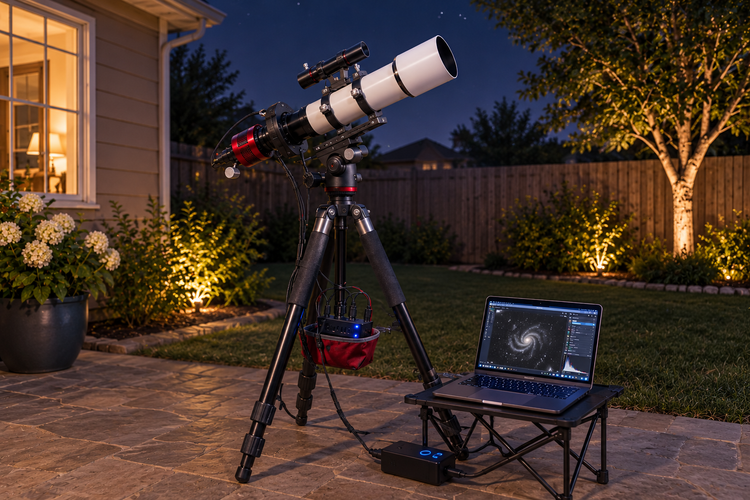
You control a hosted telescope through a computer that sits at the pier with your rig. You connect to that computer over the internet with remote desktop software, and from there you run your usual capture and sequencing programs exactly as you would in the backyard.
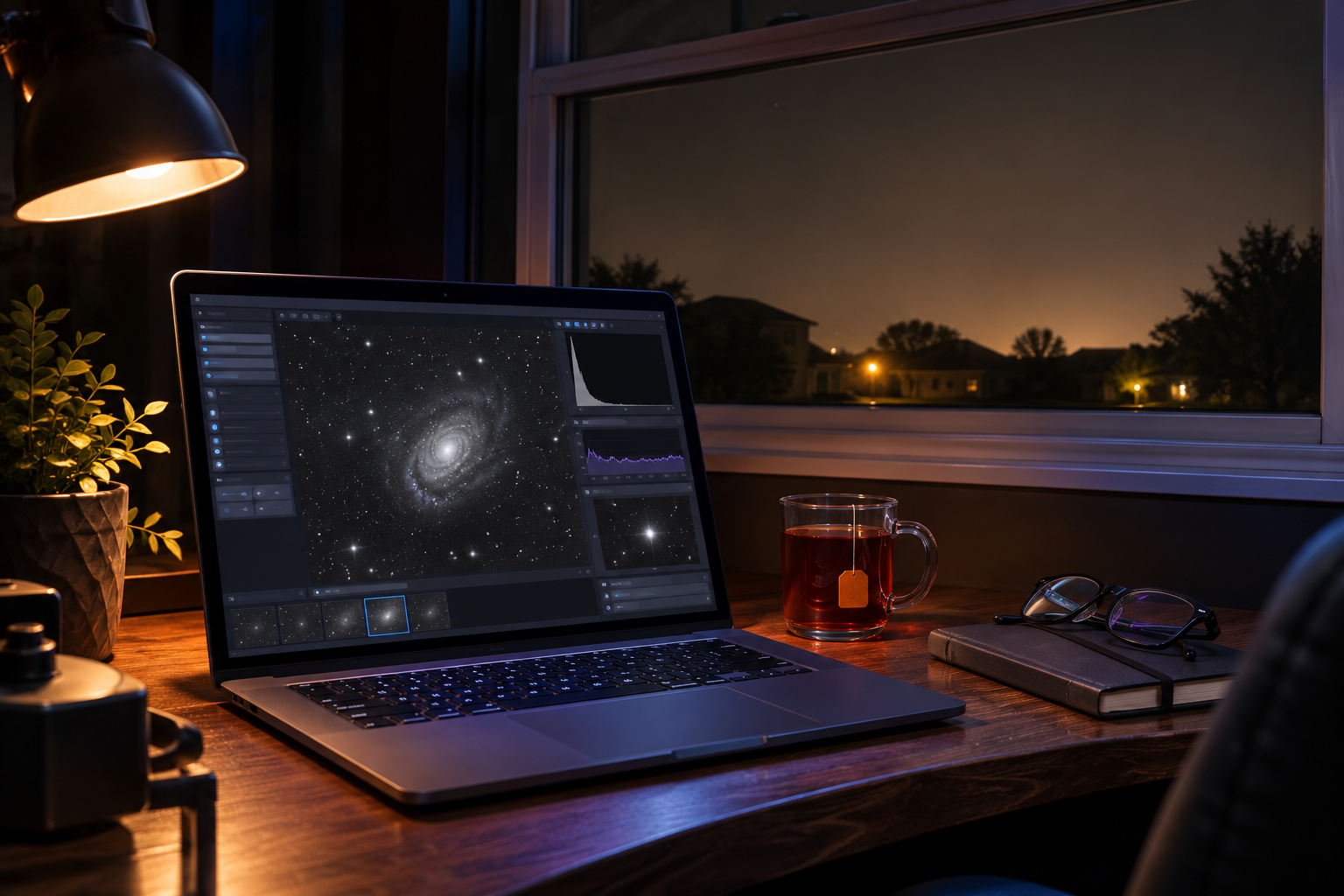
A typical setup looks like this:
- A mini PC mounted on the telescope or pier, running Windows and your imaging software.
- A powered USB hub and switchable power box (a Pegasus UPBv3 is a common choice) so you can turn individual devices on and off remotely.
- Capture and automation software such as NINA, SGP, ACP or TheSkyX. All four are supported at DSP Remote.
- Remote desktop software on your home computer or laptop to reach the pier PC.
Most remote imagers build an automated sequence so the rig can run all night without anyone watching: wait for darkness, slew, center with plate solving, autofocus, image, flip at the meridian, and park at dawn. The NINA documentation covers the Advanced Sequencer, which handles all of those steps and their safety triggers.
At DSP Remote the roll-off roofs open and close automatically based on conditions and time of day, and members get roof status by email or push notification. You can watch your rig on the 24/7 live observatory camera feeds, and add your own pier camera if you want a closer view.
What does the hosting company do, and what do you do?
The host keeps the site running and acts as your hands on the ground. You run the imaging. That split is the core of the arrangement, so here's how it divides at DSP Remote.
| DSP Remote provides | You handle |
|---|---|
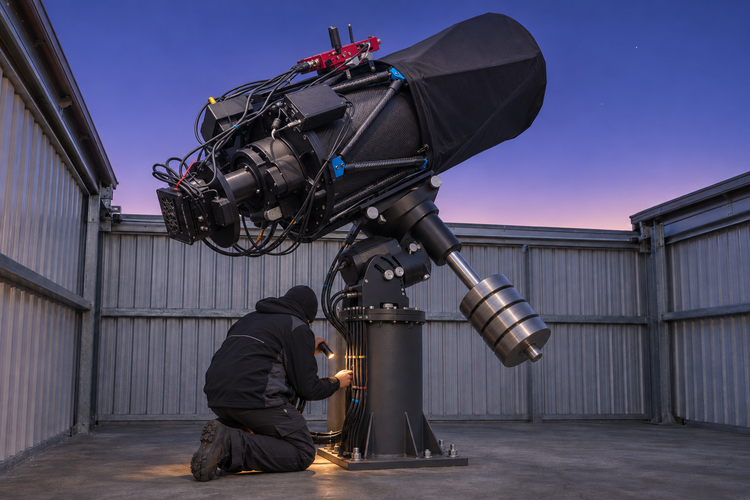
| Custom pier in a fully enclosed bay | Choosing and owning the telescope, mount and camera |
| Automated roll-off roofs with status alerts | Planning targets and building imaging sequences |
| Dedicated multi-dish Starlink internet and surge protection | Running capture software and processing your data |
| 24/7 live observatory camera feeds | Insurance for your own equipment |
| Inspection and cleaning every eight weeks (dust removal, cable checks) | Keeping your software and drivers current |
| Remote power cycling and system recovery | Calibration frames and your data library |
Firmware and software update help, and scope or mount swaps, are also available (additional charges may apply). The full list is on our Install & Maintenance page.
If your rig uses a 10Micron mount, there's an extra layer. DSP Remote is an offshoot of Deep Space Products, the certified 10Micron service center for North America, so the people behind the site hosting your mount also know how to repair it. More on that on our 10Micron Advantage page.
How much does remote telescope hosting cost?
At DSP Remote, hosting costs $300 to $550 a month, based on how much room your rig needs to swing, not on what it's worth. Larger custom setups start at $550 a month. Terms are 6 or 12 months with the rate locked.
| Kit | Swing diameter | Monthly | Typical rig |
|---|---|---|---|
| Small | Up to 38 in | $300 | Pegasus, Rainbow or ZWO mount with a 50 to 90 mm refractor or SCT up to 8 in |
| Medium | Up to 62 in | $450 | iOptron, Sky-Watcher, 10Micron, AP or SB mount with a 100 to 130 mm refractor or reflector up to 11 in |
| Large | Up to 74 in | $500 | 10Micron GM1000/2000, AP Mach1/1100, SB MyT/MX with a scope over 140 mm, up to a CDK17 |
| Extra-Large | Up to 86 in | $550 | 10Micron GM3000/4000, AP1600, SB ME with refractors or reflectors up to 24 in |
| Custom | 86 in or more | From $550 | Very large systems, with at least 12 in of clearance between neighbors |
Swing diameter is twice the longest distance from the point where your RA and Dec axes meet to the furthest part of the rig. Add 1 to 2 inches for cable slack and focuser travel. The calculator on our Plans and Pricing page does the math.
Beyond the monthly fee, budget for shipping, a pier computer and power hub if you don't already have them, and insurance. If you'd rather not install the rig yourself, our concierge install is a $500 one-time add-on (or included with select packages). It covers full rig setup, cabling, power, camera alignment, flat panel mounting, a collimation check and initial software configuration. We worked through the cost per clear night in Is Remote Telescope Hosting Worth It?
How does your telescope get to a remote observatory?
You either ship the rig or drive it there and install it yourself. Both work. Shipping saves the trip; driving lets you set up, test and build a pointing model in person.
If you ship, pack the mount, optics and electronics separately and label every cable before it comes off. Our guide on how to ship a telescope mount to a remote observatory walks through packing and carrier choice.
If you'd like to install it yourself, DSP Remote has a free on-site bunkhouse for members doing their own install, with a full kitchen, bathroom, two bedrooms and a living area. Reservations are required. There are tools and workspace on site too.
What gear works best for remote imaging?
Gear that recovers on its own works best. A rig you can't reach needs to come back from a power cycle, a dropped USB device or a lost connection without someone touching it.
Before you commit, run your rig in the backyard for a few weeks the way it will run remotely: start it from a laptop indoors, let a sequence run unattended, power cycle it from software, and see what fails. Things that usually need attention:
- Cables that snag at the meridian flip or at the park position.
- USB devices that drop out and don't reconnect after a power cycle.
- A mount that loses its position after a power loss and needs a manual home.
- A focuser or filter wheel that occasionally needs a nudge.
- Dew heaters and flat panels that you've only ever switched on by hand.
Mounts with absolute encoders, like the 10Micron GM2000, keep track of where they're pointed through power loss and can image unguided with a good pointing model. That makes them a common choice for remote piers. Strain-wave and worm-gear mounts from iOptron, Sky-Watcher, ZWO and Pegasus fit our Small and Medium kits, and they work well remotely once they pass the shakedown above.
What changes when your telescope isn't in your backyard?
You trade setup time for imaging time. No more hauling gear out, polar aligning and tearing down at 2 a.m. The rig is already aligned, cooled and waiting each night.
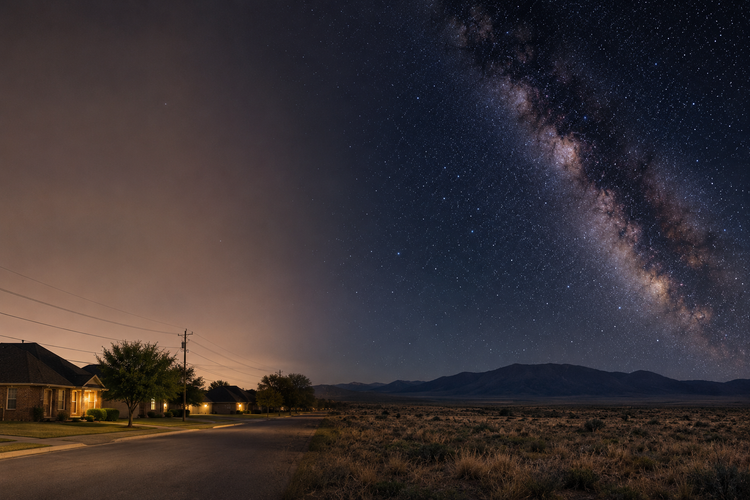
The bigger change is how much data you collect. Our site averages over 286 clear nights a year, and our spot checks during real imaging sessions show median seeing of 1.4 to 1.9 arcsec FWHM at zenith. Roof-open hours are logged live on our Site Conditions page. Under a Bortle 1 sky, broadband targets like galaxies and dust reach a given signal-to-noise ratio in far less time than under suburban skies.
What you give up is the hands-on time at the eyepiece and the ability to fix things yourself on the spot. Some people miss that. Others find the remote rig frees them to spend clear nights at home with a visual scope, or to put more time into processing. Members also get guided access to a 30-inch f/4.5 Obsession Dobsonian at Astronomer's Paradise when they visit, with a furnished warm room, if they want time at an eyepiece under the same sky.
Frequently asked questions
Do I still own my telescope with remote hosting?
Yes. Your telescope, mount, camera and accessories stay your property. The host provides the pier, building, power, internet and on-site help.
What is the difference between remote telescope hosting and renting telescope time?
Hosting puts your own rig on a pier at a dark site, available every clear night of your term. Renting telescope time means booking hours on equipment someone else owns and configured.
How much does remote telescope hosting cost?
At DSP Remote, $300 to $550 a month depending on your rig's swing diameter, with custom setups from $550. Terms are 6 or 12 months with the rate locked.
What software do I need to run a hosted telescope?
A pier computer running capture and sequencing software such as NINA, SGP, ACP or TheSkyX, plus remote desktop software to reach it from home.
What happens if my telescope needs hands-on help?
At DSP Remote, remote power cycling and system recovery are part of the service, and rigs get an inspection and cleaning every eight weeks. Support is owner-run, and most requests are answered in as little as 15 minutes.
Where is DSP Remote located?
Near Animas, New Mexico, at 4,240 ft elevation under true Bortle 1 skies, with over 286 clear nights a year on average.
Find your pier size
The first step is measuring your rig. Use the swing diameter calculator on our Plans and Pricing page to see which kit fits, then reserve your pier. If you have a question about your setup first, send Ed a note.