
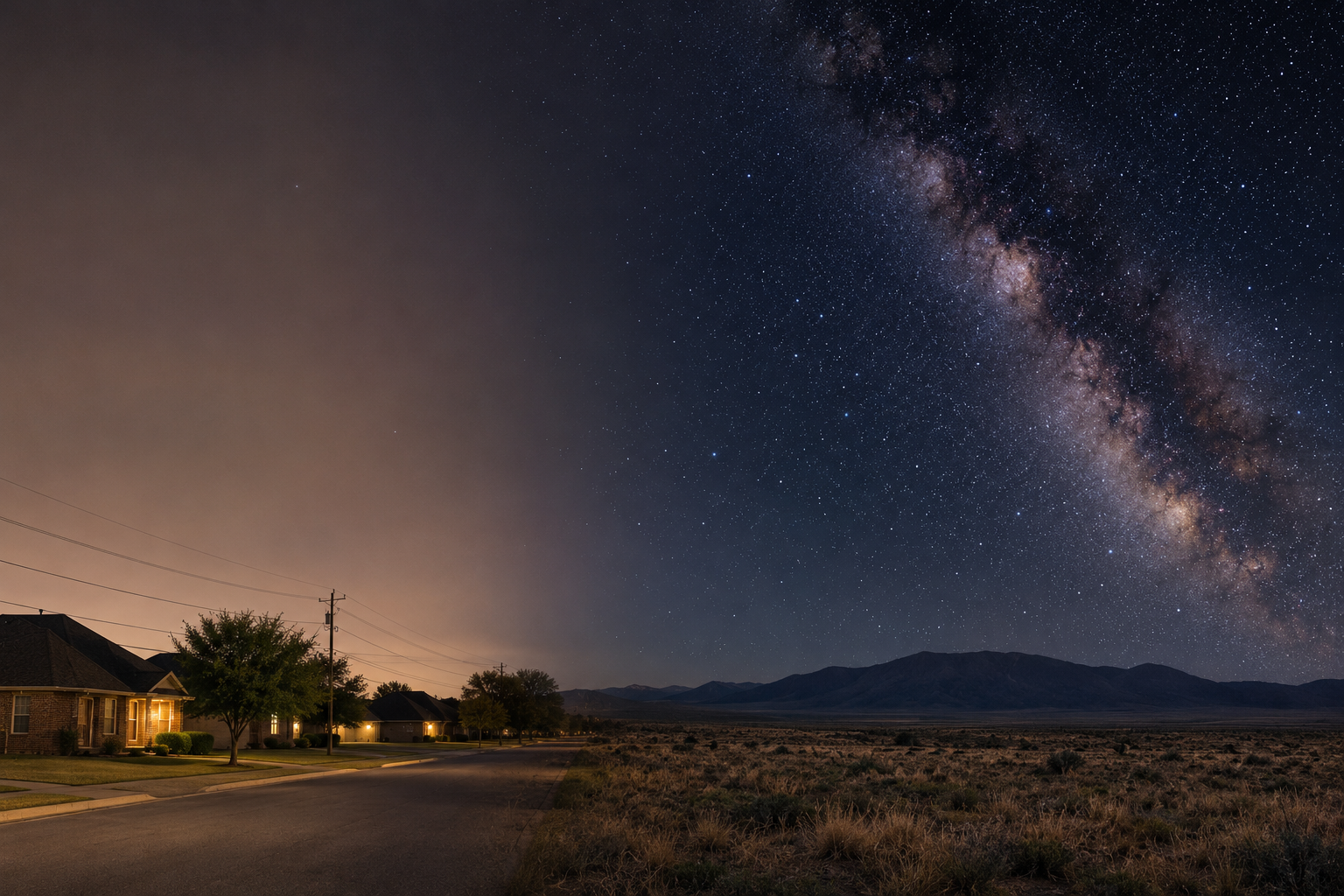
Remote telescope rental means paying for imaging time on a telescope someone else owns, set up and maintains. Hosting means your own telescope lives on a pier at a dark site and you run it from home every clear night of your term. Rental is the cheaper way to try remote imaging or grab a few targets a year; hosting wins once you image often, care about your own optics and camera, or want long integrations on the same object.
Below we compare the two on cost, control, data and commitment, with a worked example you can rerun with your own numbers.
Quick facts
- DSP Remote hosts members' own rigs near Animas, New Mexico, at 4,240 ft elevation under true Bortle 1 skies.
- The site averages over 286 clear nights a year, and roof-open hours are logged live on our Site Conditions page.
- Piers are priced by swing diameter: Small Kit $300 a month, Medium $450, Large $500, Extra-Large $550, Custom from $550.
- Terms are 6 or 12 months with the rate locked for the term, and no hidden fees.
- A $500 concierge install add-on covers full rig setup, cabling, power, camera alignment, flat panel mounting, a collimation check and initial software configuration.
- Members also get guided access to a 30-inch f/4.5 Obsession Dobsonian at Astronomer's Paradise.
What is remote telescope rental?
Remote telescope rental is a service where you book imaging time on an observatory telescope through a website and get the data files back. The operator owns the optics, mount, camera and filters, keeps them collimated and focused, and runs the observatory. You pick a target, an exposure plan and filters, and the system images it when the sky allows.
Billing is usually by the imaging hour or through prepaid credit plans, and the rate climbs with aperture and camera. Some networks run telescopes at several sites, including both hemispheres, so you can shoot southern targets that never rise from the U.S. Some also sell finished data sets from targets they shoot for many customers at once.
People search for it as remote telescope rental, rent a telescope online or online telescope rental. They mean the same thing: time on a telescope that isn't yours.
How is hosting different from renting telescope time?
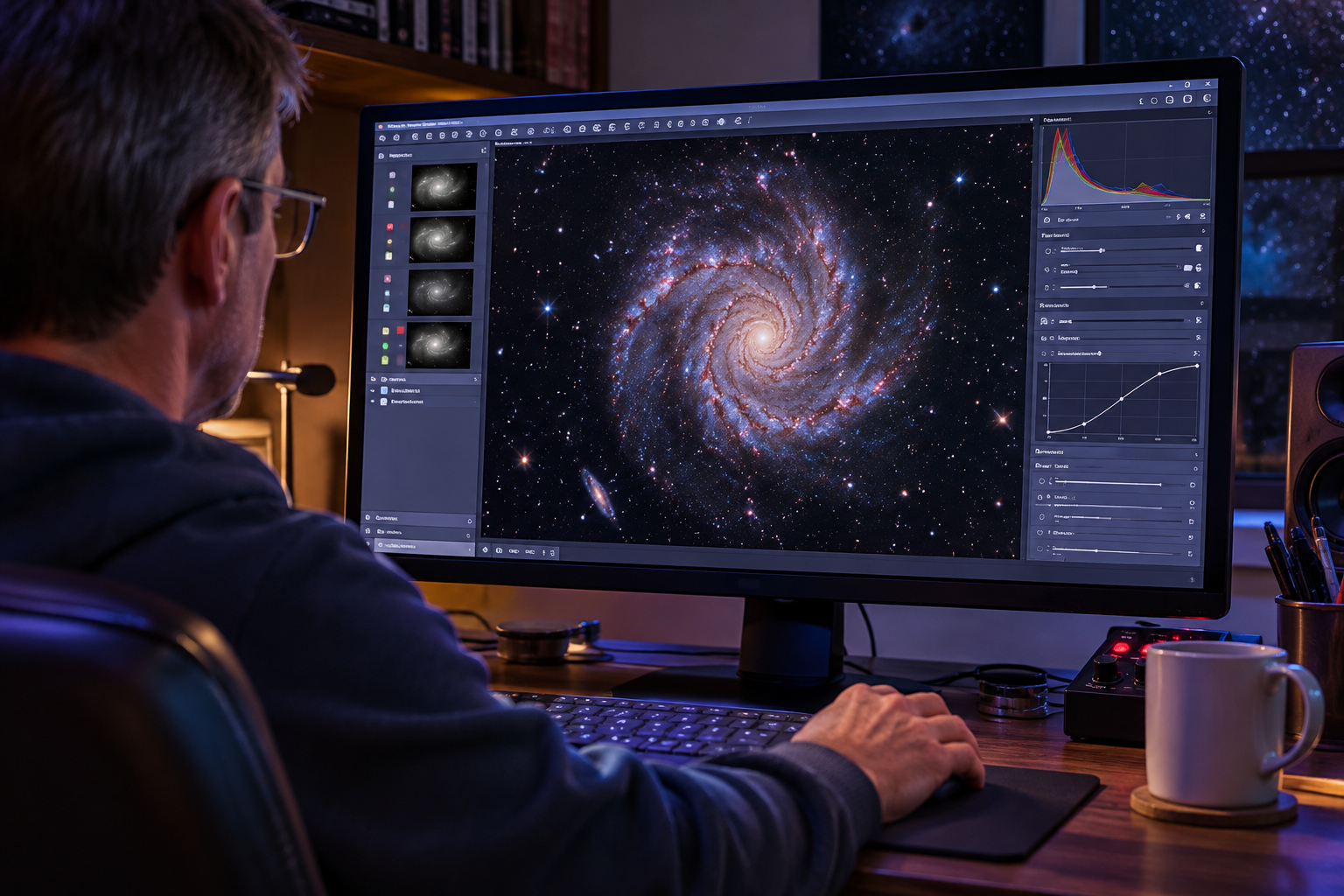
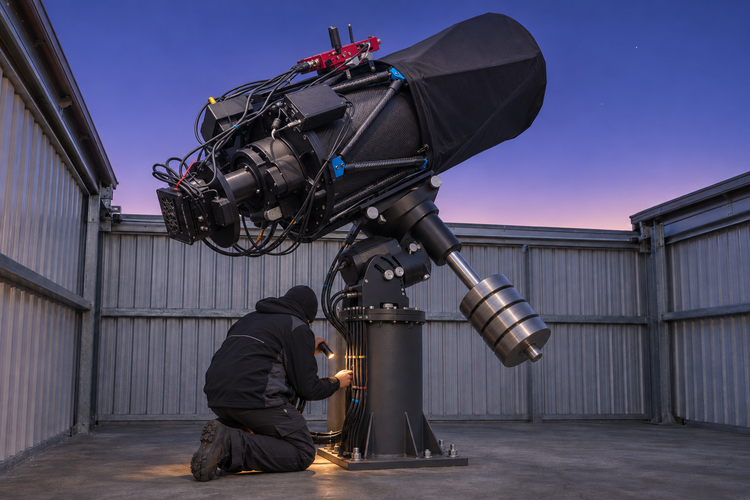
The difference is ownership. With rental you buy hours on someone else's instrument. With hosting you rent a pier, and the telescope, mount, camera, filters and computer on it are yours and available to you every clear night.
That one difference changes almost everything else:
| Renting telescope time | Hosting your own rig | |
|---|---|---|
| Who owns the gear | The rental operator | You |
| How you pay | Per imaging hour or credits | A flat monthly pier fee |
| Upfront cost | None beyond the hours | Your rig, shipping and setup |
| Choice of optics and camera | Whatever the operator offers | Anything that fits your pier |
| Access | Booked or queued slots, shared with other users | Every clear night of your term |
| Software | The operator's booking system | Your own NINA, SGP, ACP or TheSkyX sequence |
| Commitment | As little as one session | A 6 or 12 month term at DSP Remote |
| What you learn | Processing | Processing plus running an observatory |
Neither is better in the abstract. The right one depends on how many hours you want each month and whether owning the instrument matters to you.
How much does renting telescope time cost compared with hosting?
Rental cost scales with the hours you use, while a hosted pier costs the same whether you image ten hours a month or two hundred. So the break-even point is simple: divide the monthly pier fee by the rental rate you'd actually pay.
Here's a worked example. Rental rates vary a lot by telescope, so the hourly figures below are placeholders, not quotes. Plug in the real rate from the service and telescope you'd use.
| Hosted pier at DSP Remote | Monthly fee | Break-even at $25/hr | Break-even at $50/hr |
|---|---|---|---|
| Small Kit (swing up to 38 in) | $300 | 12 hours | 6 hours |
| Medium Kit (swing up to 62 in) | $450 | 18 hours | 9 hours |
| Large Kit (swing up to 74 in) | $500 | 20 hours | 10 hours |
| Extra-Large Kit (swing up to 86 in) | $550 | 22 hours | 11 hours |
Now compare those break-even hours with what a hosted rig can actually collect. In a typical 365 days our roofs have been open about 2,400 hours, which averages out to roughly 200 hours a month (the live total is on the Site Conditions page). Even if you only use a fraction of that, a Medium Kit passes 18 hours early in the month.
The fee isn't the whole cost of hosting, though. Count these too:
- The rig itself, if you don't already own one you'd move to the pier.
- Shipping it out, or driving it out and doing your own install.
- Insurance. At DSP Remote, members carry a personal articles policy through their own agent, typically about $1 per $1,000 of equipment per month, so a $20,000 rig runs about $20 a month.
- Your own time learning to run the rig unattended.
If you already own a capable imaging rig that sits under cloudy or light-polluted skies most of the year, the equipment cost is already spent. That's the case where hosting pays off fastest. Our post on the clear-night math of hosting versus the backyard runs those numbers in more detail.
Who is telescope rental best for?
Rental fits imagers who want a handful of targets a year, want to try remote imaging before buying anything, or want a telescope and camera they don't own. It's also the simplest way to reach southern-sky objects from the U.S.
It suits you if most of these are true:
- You image fewer than about 10 hours a month and don't expect that to change.
- You don't own an imaging rig, or the one you own is a small grab-and-go setup you want to keep at home.
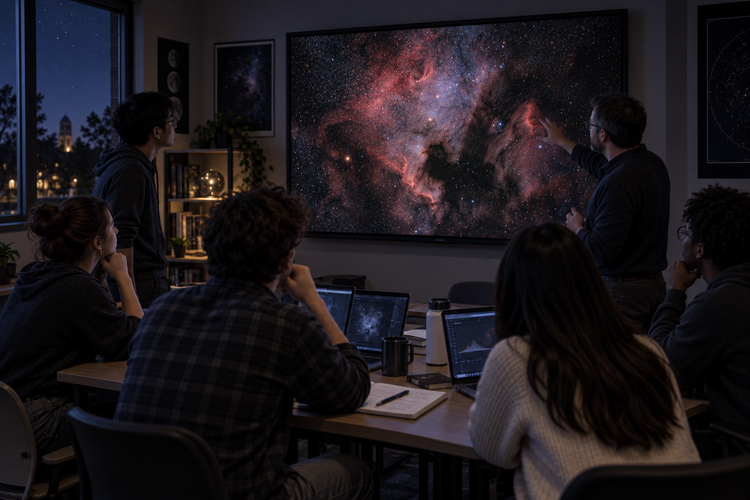
- You enjoy processing more than capture, and you're happy letting someone else handle focus, guiding and flats.
- You want to shoot a target with a specific large aperture once, without buying it.
The trade-offs are control and time. You work inside the operator's scheduling, other users compete for the same clear nights, and the long projects many imagers want (30 or 40 hours on one faint nebula) get expensive by the hour.
When does hosting your own rig make more sense?
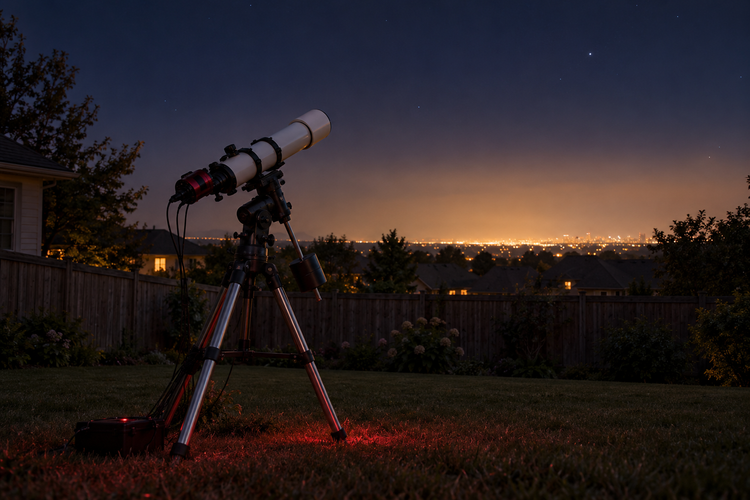
Hosting makes more sense once you want many hours a month, deep integrations on single targets, or full control over the optics, camera, filters and sequence. It also makes sense when you've already bought good gear and your backyard sky is what's holding it back.
Integration time is the big one. Signal-to-noise grows with the square root of total exposure, so doubling the signal-to-noise ratio of an image takes four times the hours. From a Bortle 7 backyard, sky glow adds noise to every sub and pushes that hour count up further; our post on what works from Bortle 7 covers what you can do about it at home. Under a Bortle 1 sky, each hour carries far less sky background, and a hosted rig can stack those hours night after night without you booking a slot.
Hosting also suits imagers who like the engineering. You choose a 10Micron GM2000 or an Astro-Physics Mach2, an ASI2600MM or a QHY600, a Pegasus UPBv3 for power, and you build the NINA sequence that runs it all night. At DSP Remote you can also add your own pier camera to watch the rig. The NINA documentation is a good place to see how an unattended night is structured before you commit.
Can you start with rental and move to hosting later?
Yes, and it's a sensible order to do it in. A few months of rented time teaches you processing on clean dark-site data and shows you which focal lengths and targets you keep coming back to. That's useful when you then choose the rig you'll host.
If you go that route, use the rental period to plan the hosted rig:
- Note which image scales you liked. That points you at a focal length and camera pairing.
- Decide whether you want one wide-field rig or a longer focal length setup, since that sets your pier size.
- Measure your planned rig's swing diameter: twice the longest distance from the point where the RA and Dec axes meet to the furthest part of the rig, plus 1 to 2 in for cable slack and focuser travel. The calculator on Plans and Pricing does the math and tells you which kit fits.
- Shake the rig down in your backyard first, so every cable, driver and power port works before it leaves home. Our guide to shipping a telescope mount covers packing.
What does a hosted rig at DSP Remote include?
A pier at DSP Remote gives your rig a custom pier in a fully enclosed bay, automated roll-off roofs that open and close on conditions and time of day, and dedicated quad-dish Starlink internet that can expand to eight dishes. You get roof status by email or push notification, 24/7 live observatory camera feeds and surge protection.
On the service side, we inspect and clean every telescope every eight weeks, handle remote power cycling and system recovery, and help with firmware and software updates. Scope and mount swaps are available, and additional charges may apply. Details are on the Install and Maintenance page.
Support is owner-run with no ticket queue. Most requests get an answer in as little as 15 minutes, and within 24 hours at most. If you'd rather install your own rig, there's a free on-site bunkhouse (reservations required) with a full kitchen, plus tools and workspace on site.
And you're not limited to your own aperture. Members get guided access to a 30-inch f/4.5 Obsession Dobsonian at Astronomer's Paradise, with a furnished warm room, for nights when you'd rather look than image. To see what members are producing, browse the member images.
Frequently asked questions
Is remote telescope rental the same as remote telescope hosting?
No. Rental sells you imaging time on a telescope the operator owns. Hosting rents you a pier at a dark site for a telescope you own, available every clear night of your term.
Is it cheaper to rent telescope time or host your own telescope?
Renting is cheaper for a few hours a month. Divide the monthly pier fee by the hourly rental rate to find your break-even; at DSP Remote a Medium Kit is $450 a month, so at $25 an hour hosting wins past 18 hours.
Do I need my own telescope to use DSP Remote?
DSP Remote hosts members' own rigs on custom piers. Members also get guided access to the 30-inch Obsession Dobsonian at Astronomer's Paradise.
How long is a hosting term at DSP Remote?
Terms are 6 or 12 months, with the rate locked for the term. Single or multi-year agreements are available, and there are no hidden fees.
Can I try rented telescope time before buying a rig to host?
Yes. Rented time is a low-cost way to learn processing on dark-site data and find the focal lengths and targets you prefer before choosing the rig you'll host.
What software runs a hosted telescope?
Your own capture and sequencing software on a pier computer, reached from home by remote desktop. DSP Remote supports NINA, SGP, ACP and TheSkyX.
If your gear is already bought and your backyard sky is the bottleneck, a hosted pier puts those hours to work every clear night. Measure your rig with the swing diameter calculator on Plans and Pricing and reserve your pier, or contact Ed if you want help choosing a kit size.